What is a DAC Cable?
Fibrecross is a trusted fiber optic solution provider & optical transceiver manufacturer serving data centers, telecom, and enterprise networks worldwide. We deliver high-quality, high-speed product backed by strong R&D, global certifications, and tailored OEM/ODM support—built for performance, built for trust.
Introduction
In the fast-paced world of data centers, where cost, speed, and reliability are critical, Direct Attach Copper (DAC) cables have become a go-to solution for short-range, high-speed connectivity. These cables offer a cost-effective and straightforward way to connect servers, switches, and storage devices. This article dives into what DAC cables are, how they function, their advantages, limitations, and their role in modern networking environments.
What is a DAC Cable?
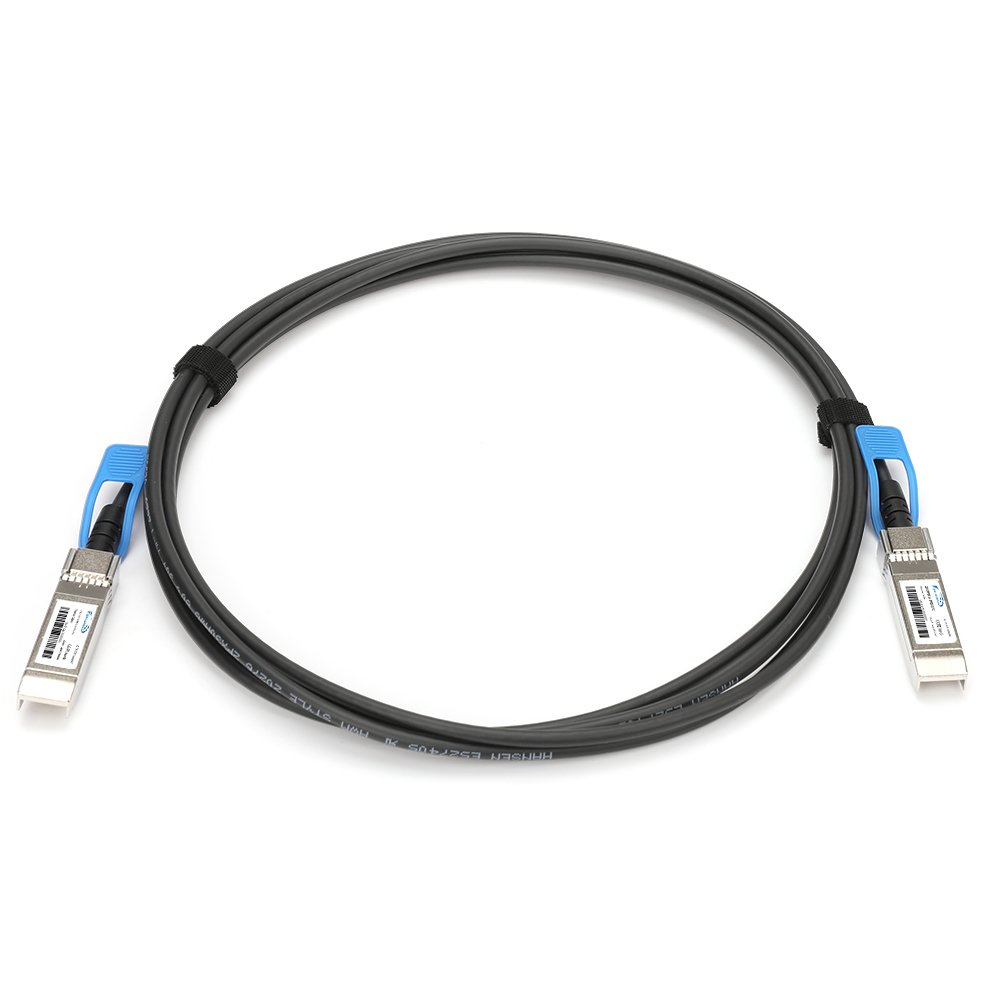
A Direct Attach Copper (DAC) cable is a pre-terminated, twinaxial copper cable with fixed connectors at both ends. Designed for high-speed data transmission, DAC cables are commonly used in data centers to link networking equipment over short distances. Key features include:
Structure: Typically made of 26-28 AWG twinaxial copper, with shielded pairs to minimize interference.
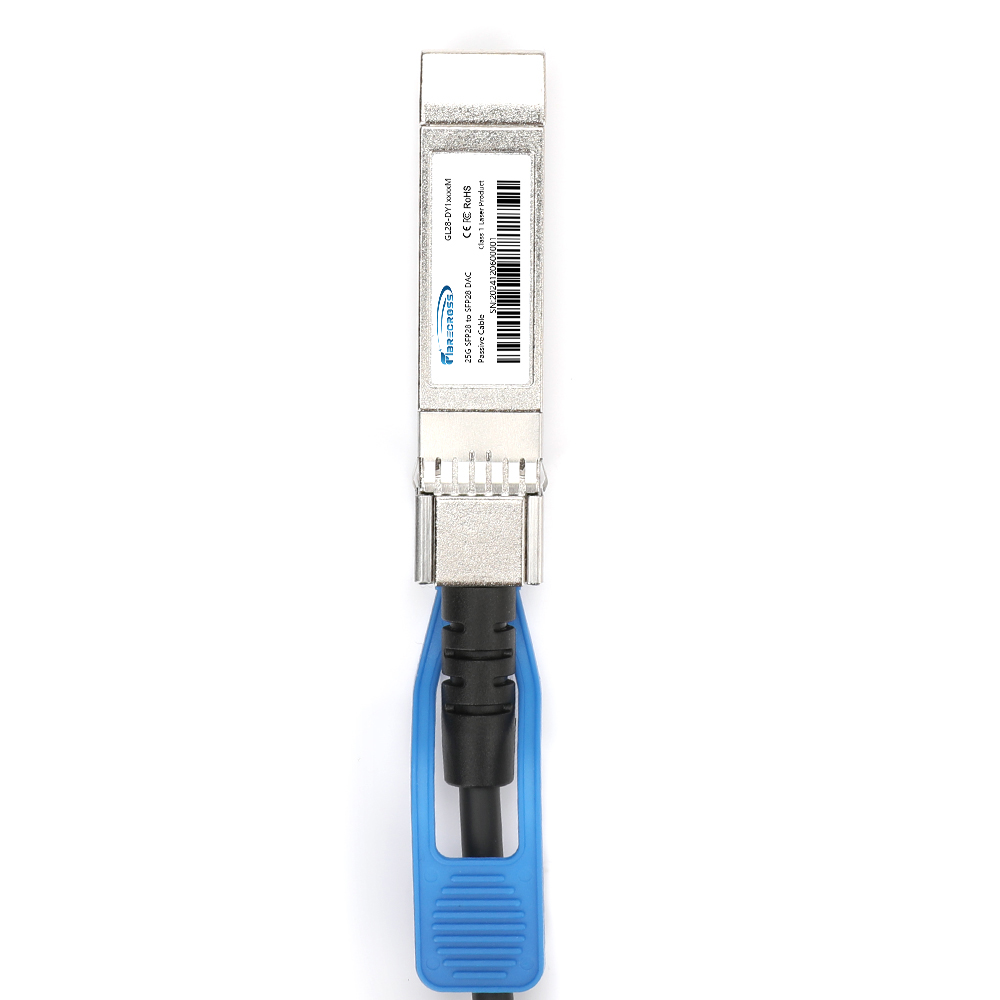
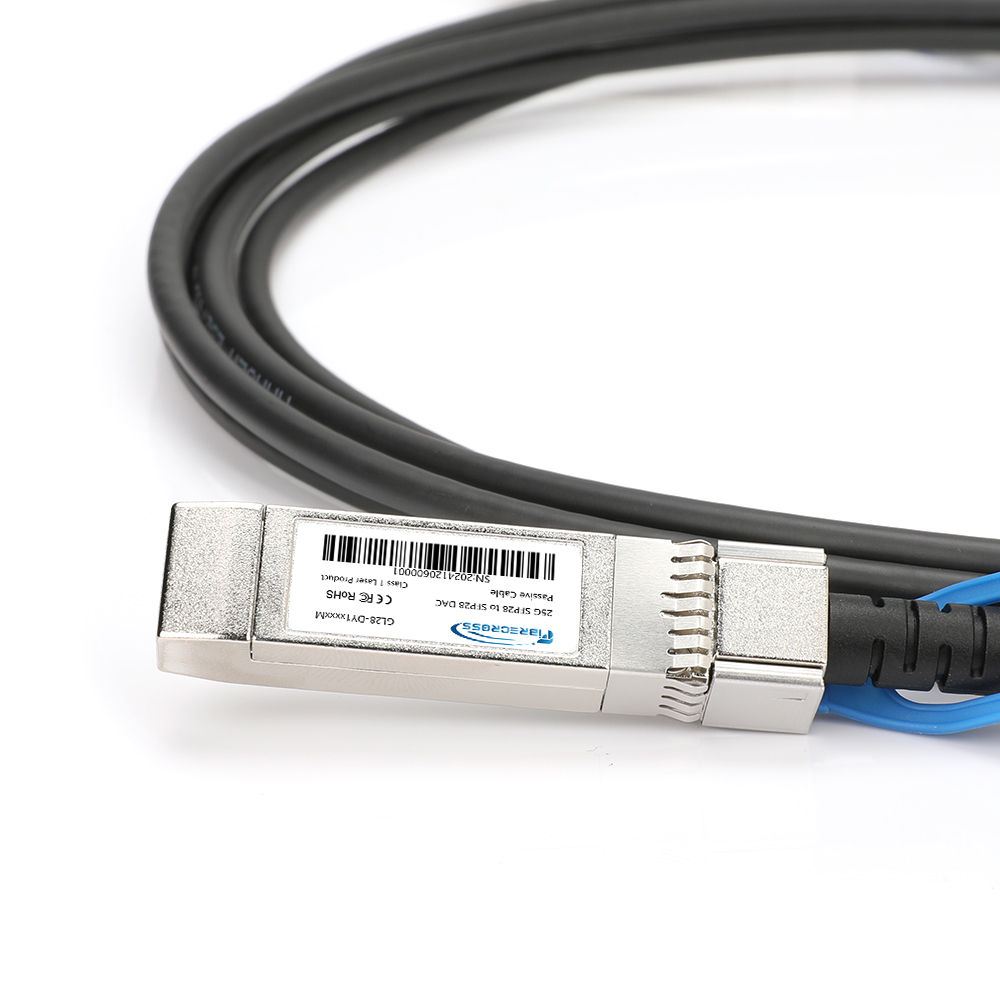
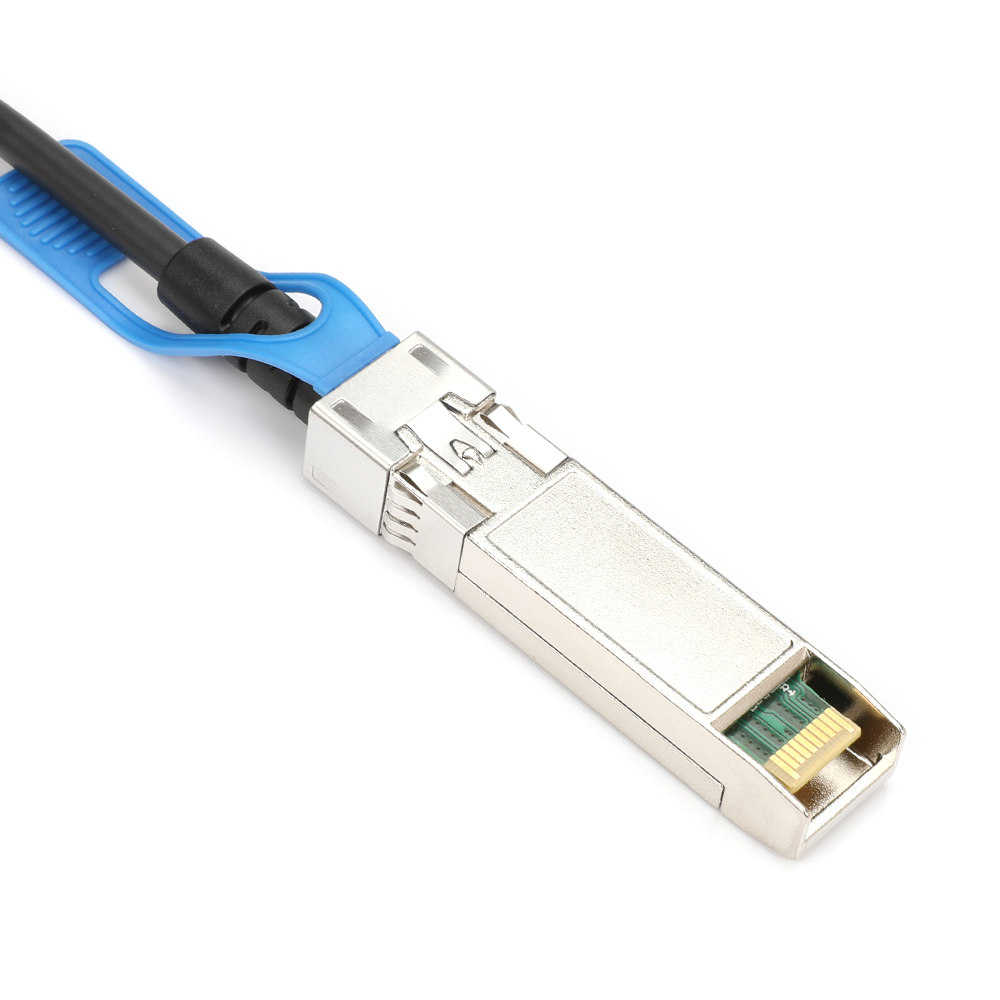
Connectors: Fixed modules (e.g., SFP+, QSFP+, QSFP28) that plug directly into device ports.
Fixed Length: Available in predefined lengths, typically ranging from 0.5 to 7 meters.
Signal Integrity: Enhanced shielding ensures reliable communication, especially at higher data rates (e.g., 10G, 40G, 100G).
Unlike modular transceivers, DAC cables are a single, non-separable unit, making them a plug-and-play solution.
How Do DAC Cables Work?
DAC cables function by transmitting electrical signals directly through copper conductors, bypassing the need for optical conversion. The process is simple:
Direct Connection: The cable’s connectors are inserted into compatible ports on devices like switches, routers, or servers.
Signal Transmission: Data is sent as electrical signals through the copper twinax, maintaining high-speed communication.
No Conversion: Unlike fiber optic cables, DACs require no optical transceivers, reducing latency and complexity.
This direct electrical transmission makes DAC cables ideal for short-range, high-performance applications.
Advantages of DAC Cables
DAC cables offer several benefits, making them a popular choice in data centers:
Cost-Effective: Significantly cheaper than optical transceivers and fiber cables, ideal for budget-conscious deployments.
Low Latency: No optical-electrical conversion results in slightly lower latency compared to fiber solutions.
Rugged Design: Copper cables are less sensitive to bending or physical stress, suitable for dense cabling environments.
Plug-and-Play: No configuration or additional components needed, simplifying installation and maintenance.
Low Power Consumption: Passive DACs consume minimal power, while active DACs use slightly more but remain efficient.
Limitations of DAC Cables
Despite their strengths, DAC cables have some constraints:
Limited Distance: Signal degradation limits DACs to short ranges, typically 5-7 meters for passive cables and up to 15 meters for active ones.
Fixed Length: Pre-terminated cables cannot be adjusted, requiring precise length planning.
Weight and Bulk: Copper cables are heavier and less flexible than fiber, which can complicate cable management in large setups.
Speed Constraints: Higher data rates (e.g., 100G and beyond) reduce maximum cable length due to signal integrity challenges.
Applications of DAC Cables
DAC cables are widely used in environments requiring high-speed, short-range connectivity, including:
Data Center Interconnects: Linking servers to top-of-rack switches or connecting switches within or between adjacent racks.
High-Performance Computing (HPC): Supporting low-latency connections in compute clusters.
Ethernet and InfiniBand Networks: Commonly used for 10G, 25G, 40G, and 100G Ethernet or InfiniBand deployments.
Storage Networks: Connecting storage arrays to servers or switches in SAN environments.
Types of DAC Cables
DAC cables come in various forms to meet diverse networking needs:
Standard DAC Cables: Direct point-to-point connections (e.g., SFP+ to SFP+ for 10G Ethernet).
Breakout DAC Cables: Split a high-speed port into multiple lower-speed ports (e.g., QSFP+ to 4x SFP+ for 40G to 4x 10G).
Passive vs. Active DACs:
Passive DACs: No internal electronics, limited to ~7 meters, ultra-low power consumption.
Active DACs: Include signal amplification for slightly longer reaches (~15 meters), with modest power usage.
DAC Cables vs. Optical Solutions
To understand DAC cables’ role, it’s useful to compare them with optical solutions like Active Optical Cables (AOCs) and traditional fiber:
Cost: DACs are far cheaper than AOCs or fiber with transceivers, making them ideal for short-range applications.
Distance: DACs are limited to 5-15 meters, while AOCs reach up to 100 meters and fiber spans kilometers.
Latency: DACs have a slight latency advantage due to direct electrical transmission.
Flexibility: Optical solutions allow modular transceivers and cables, while DACs are fixed.
Cable Management: DACs are bulkier than fiber or AOCs, but their durability suits dense environments.
Real-World Example
Imagine a data center deploying a 40GbE network. A QSFP+ DAC cable connects a server to a top-of-rack switch 3 meters away, delivering high-speed connectivity at a fraction of the cost of optical solutions. The cable’s rugged design handles the tight bends of a crowded rack, and its plug-and-play nature ensures rapid setup. Such configurations are common in hyperscale data centers, enterprise IT, and storage networks.
Conclusion
Direct Attach Copper (DAC) cables are a cornerstone of short-range, high-speed connectivity in modern data centers. Their low cost, minimal latency, and ease of use make them ideal for connecting devices within racks or across adjacent racks. While not suited for long distances or ultra-flexible deployments, DACs excel in cost-sensitive, high-performance scenarios. When planning your network, weigh the trade-offs between DACs, AOCs, and traditional fiber to find the best fit for your needs.
Additional Resources
Stay tuned for our upcoming guide on Active Optical Cables (AOCs) for a deeper look at optical connectivity. For more insights, check out industry resources like Fibrecross’s DAC compatibility guides or share your questions in the comments below!


